When to go and where to stay in Goa ?

This week, Angela asked the following question: When to go and where to stay in Goa?

When to go to Goa is a real tough choice. People I speak to have different opinions and each person seems to love Goa in a particular season. Basically, when to go to Goa can be divided into 3 different options:

1. Christmas / New Years in Goa: Christmas and New Years is the peak season for Goa. It is when EVERYONE and when I say everyone, I mean everyone, thinks of going to Goa. While most Europeans book their New Years holiday to Goa well in advance, most Indians do it at the last minute. On the negative side, Goa is terribly busy and expensive at this time of the year. But on the positive side, Goa is at its most happening during the New Year’s period. Visitors get to experience Goa in its best avataar with rocking beach parties, dances and live music everywhere. 

2. Goa Monsoon: The monsoon in Goa is not for everyone. Some people love Goa in the monsoon and some people absolutely hate it. And unlike in most other parts of India and of the world, the monsoon in Goa is quite unique. From mid June to the end of September, the rain lashes down on Goa with great fury. Especially in July and August, there seems to be no letdown from the rain as it pours and pours and pours (well, you get the message) the whole day and night. But if you dont mind getting a bit wet, then the monsoon in Goa is also the time when you get to see a different side of Goa – when most of the tourists are away, Goa sort of relaxes and lets its hair down. The scenery and the greenery are absolutely stunning at this time. Do it like the French, wear shorts, take heavy duty umbrellas and you will really learn to enjoy the Goan monsoon. 

3. Rest of the year: Apart from New Years and the Monsoon, Goa is pretty much the same the rest of the year. The prices are more reasonable, there are fewer tourists and getting around Goa is much easier. For those who have the time, I would suggest Jan – April or October – November as great pre-season times to visit Goa. 

As for where to stay in Goa, Goa has loads and loads of places to stay, depending on your budget and your interests. Most people head to North Goa to the Baga-Calangute strip. This is where all the “action” is and most people choose a medium budget hotel in this area. For those who find North Goa too expensive / crowded, they usually head to South Goa which is not yet as developed / popular as North Goa and hence is much cheaper and quieter. 

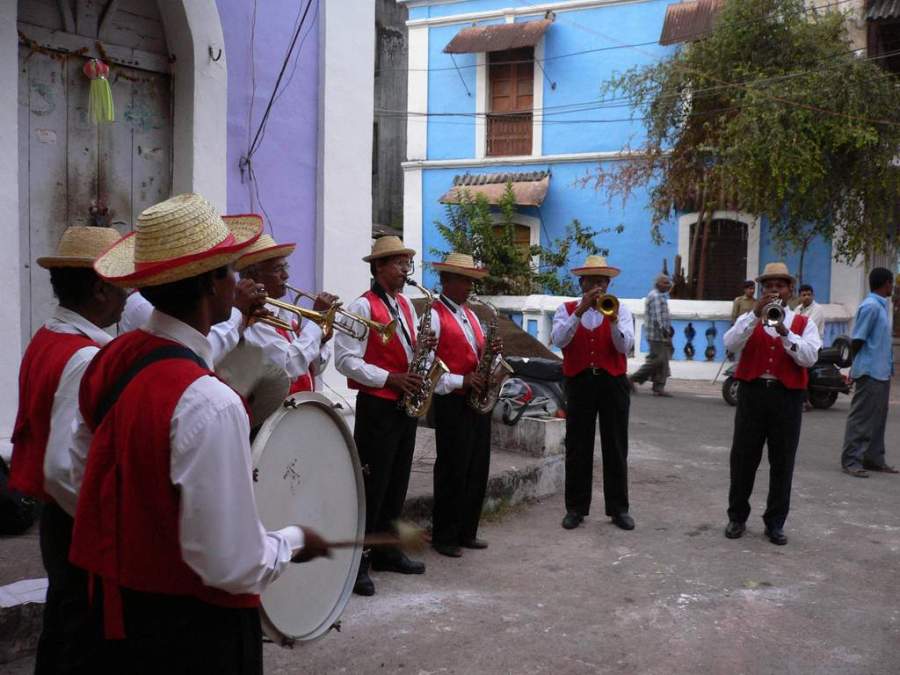
Many tourists however are looking to experiment and staying in offbeat areas such as Fontainhas, the Latin Quarter of Panjim. Here you find quaint old Portuguese houses, small bye lanes, a baker cycling by, dogs lying in the sun and cats licking themselves in the shade. Fontainhas is the other Goa, where those looking to learn more about Goan culture and history come to visit and stay. Many photographers (hobby and professional) fall in love with Fontainhas as there is so much old world history to capture in their lenses. Many tourists who stay in Fontainhas love to simply walk about for hours, soaking up the Latin atmosphere. Fontainhas is also home to my Mitaroy Heritage Homestay (www.mitaroygoahotel.com) – my mother’s ancestral heritage home that I converted into a Homestay. 

Adventure Tourism in Goa: Are you ready?

This blog post might not be for the faint of heart!
After relying successfully on promoting its beaches, Goa is now trying to expand its tourism portfolio to other kinds of tourism including heritage tourism and now adventure tourism. The Goa Tourism Department has now turned to adventure sports like hang-gliding, white water rafting and hot air ballooning to attract the more active minded tourists to Goa. 
“Adventure tourism is an emerging trend across the country. We are trying it to diversify our tourism portfolio,” says Tourism Minister Dilip Parulekar. As Mr Parulekar rightly notes, adventure tourism is a huge emerging trend, not only in India but all across the world. While people today spend more and more time sitting at their desks in front of a computer or screen, they are looking to be a bit more active and adventurous when they are on holiday. “We are now considering other adventure sports as well, such as hot air ballooning and setting up a hang-glider base,” Parulekar said.

And for those who find hand gliding or wind surfing too strenuous, there is also a plan to combine adventure tourism and Heritage tourism by offering a ride in a hot air balloon that would provide a birds-eye view of the historic old Goa church complex (a UNESCO Heritage Zone) as well as Fontainhas, the Latin quarter of Panjim. 

So if you do find yourselves in a hot air balloon over my Mitaroy Heritage Homestay in Fontainhas, don’t forget to wave !

The history of Fontainhas, Goa’s Latin Quarter

Today Fontainhas is renowned as the Latin Quarter of Goa. But it had its own set of problems when it was being developed in the beginning. 

As more and more Portuguese families came to the settlement, the ward of Fontainhas grew rapidly and haphazardly, without any clear town planning in place. A set of houses, built wall to wall without proper sanitary and hygiene, raised grave health concerns. As a result, the then Governor of Goa, Jose Ferreira Pestana was forced to write to the President and Councillors of the Municipal Council to take action. In his letter he writes:

“The Governor informs the municipal authorities that there is urgent need to take all care and make all possible efforts to improve the Bairro das Fontaihas, where a large number of people live crowded in small houses, with little light, poor ventilation and little cleanliness and lot of humidity and heat. This may cause health problems to the inhabitants and, consequently, grave damage to the city. Therefore the municipality is asked to take action to see that the people of the ward as well as others in the city observe the ‘posturas’ that the Municipality has published. Also to remain watchful and have good management of its Taluka regimen”

Further the Governor General instructed the Municipality that the following measures needed to be undertaken:

  • Open windows on the walls for those houses that have none
  • Increase in size others that are small
  • Increase the height of the houses
  • Expose Enclosures made of ‘ollas’ (palm leaves
  • Clear the lanes and by-lanes of shacks, which they are trying to get converted into legal acquisitions using roof tiles and buildings walls of stones
  • Tenants should be asked to maintain the cleanliness  of the properties and drains of their area in order to allow free flow of water into the river

History of Fontainhas, Panjim, Goa

The Governor General also feared that the dirt and unhygienic conditions could cause sickness and epidemic which would spread much faster in a warm climate like that in Goa. 

The neighbourhood of Fontainhas was, as its name suggests, highly reliant on the “little fountain” of the area. The Governor General therefore starkly emphasized the need to improve the hygienic conditions around the fountain, which was the only source of potable drinking water in those days.

Being reminded of the origins of Fontainhas also serves to remind us of the importance of keeping our surroudings clean. My cleaning staff are instructed to not only clean the inside of The Mitaroy Heritage Homestay but also to sweep the front and back lanes that run beside our Heritage Homestay. If all of us do our bit, Fontainhas will be remain clean and hygienic for both its residents and its visitors. 

An tribute to the Fontainhas Art Festival

The Fontainhas Art Festival or “The Fontainhas Festival of the Arts” as it is officially known, was created with the aim of revitalising Panjim’s 200 years old Latin quarter and putting spotlight back on Goa’s neglected architectural legacy.

The week long festival of music, art, culture and hertiage put the spotlight on Panjim’s quaint and picturesque Latin quarter. A settlement on the fringes of the capital Panaji that was meant originally for Portuguese families, Fontainhas (which means “little fountain” in Portuguese and gets its name from the fountain at the foot of the hill) began to sprout around 1770. Patterned along the lines of Lisbon’s Bairo Alto, Fontainhas (also known as Bairro de Fontainhas) has a certain Moorish character to it and is hence referred to as the Latin quarter. Macau in China (originally another Portuguese settlement) also boasts of a similar Latin Quarter. 

With its single-storied bungalows criss-crossing narrow bye lanes, Fontainhas’ Iberian ambience makes it an attractive proposition for tourists, especially French and Portuguese tourists. A number of houses in the area have already been converted into ‘pousadas’ (small guest houses) ranging from the tacky to the upmarket. The Mitaroy, Goa – A Heritage Homestay is the latest addition with its 4 Heritage Suites of 1000 sq ft each. 

The Fontainhas Art Festival was organised by the Goa Heritage Action Group (GHAG). The Festival managed to attract a large number of tourists and locals to Fontainhas. As tourists get more discerning, they are looking for more than just sun and sand, they are looking to imbibe the local culture of the destination. And local festivals such as the Fontainhas Art Festival is able to attract such discerning tourists. The uniqueness of the Fontainhas Art Festival  was that artists exhibited their works in the houses within the Latin Quarter of Fontainhas. A selection of singers such as the famous Lorna of Goa and a number of local Goan bands also added to the whole experience, serenading the visitors as they went from house to house appreciating the art on offer. 

Fontainhas Art Festival, Fontainhas, Panjim, Goa

All in all, the Fontainhas Art Festival helped to throw a spotlight on one of Goa’s most charming, yet neglected architectural legacies. And that makes the demise of the Fontainhas Art Festival all the more sadder…

The Monsoon in Goa


There is something quite majestic about the monsoon in Goa as is batters down in fury on the dry earth.

Im sitting in my upstairs Suite at my Mitaroy Goa Hotel and as I type this, I can hear the rain thundering down on the tiled roof above me. Whenever I stay at my Mitaroy Goa Hotel in the monsoons, I make it a point to stay in the upstairs Suite so that I can hear the rain as it hits the tiles.

There is something in the Indian Monsoon that brings out the writer in one and the Monsoon in Goa has the same effect. Images of hot samosas (homemade by one of the ladies in Fontainhas) and adrak wali Masala chai automatically pop into my mind. It was 7th standard Hindi class, if I remember correctly, where we had this one story about a man who came back home after work and had the hot samosas and masala chai that his wife had prepared for him. And the image has stuck in my mind.

During the day, I love to sit on the my Suite balcony and watch the rain as it cascades incessantly from the rooftops. The coconut trees sway in the background, bowed down by the constant rain that falls on it. Sitting on my Suite balcony and watching the rain pour down, I am both enamoured and awed by the force and fury of the monsoon. I also watch as the small rivulets turn into gushing little streams and how the students from the nearby school walk in these streams on their way back home. Like the cliche, it seems to be the girls who carefully and daintily side step the streams while the boys make it a point to step right into the big puddles!

The advent of the Monsoon in Goa also signifies the end of the tourist season in Goa. On the beach mile in North Goa (read Baga, Calangute, Candolim etc), the shacks are securely shut and covered, to be opened after the monsoon has passed. Surprisingly, there are still tourists in Fontainhas and for some reason known to them alone, they all seem to be French. Although originally the Portuguese Quarter of Panjim, it is now French that can be heard in the streets as the French tourists walk around with their cameras and their umbrellas.

The Panjim riverfront is a popular Monsoon hangout for local and tourist couples alike as they hold hands and walk along the Mandovi river. Unmindful of the pouring rain, it seems that these couples only have eyes for each other.

Another popular Monsoon sightseeing spot is the Dona Paula jetty, a few kilometres drive from Panjim. If you climb to the top of the small outcrop, near the statue of Dona Paula and her lover, you can marvel at the force of the waves as they thrash and pound at the Dona Paula jetty, sending their spray  high into the air.

But the Monsoon is best enjoyed outside the city of Panjim. Driving through the verdant green fields and small villages outside Panjim it seems as if the whole of Goa has been washed clean by an unseen hand!

Mihir Nayak