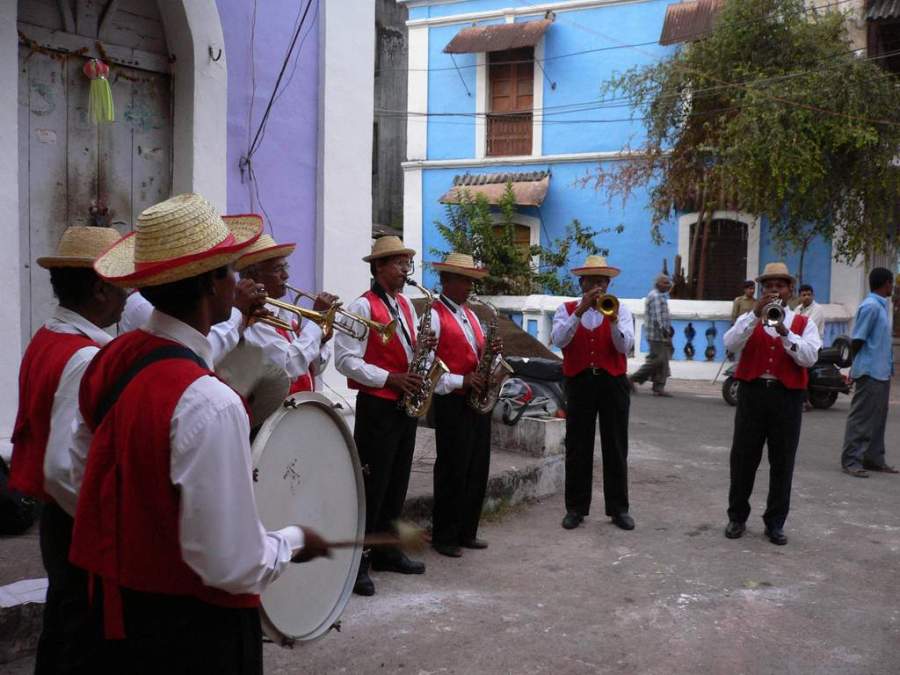
The history of Fontainhas, Goa’s Latin Quarter

Today Fontainhas is renowned as the Latin Quarter of Goa. But it had its own set of problems when it was being developed in the beginning. 

As more and more Portuguese families came to the settlement, the ward of Fontainhas grew rapidly and haphazardly, without any clear town planning in place. A set of houses, built wall to wall without proper sanitary and hygiene, raised grave health concerns. As a result, the then Governor of Goa, Jose Ferreira Pestana was forced to write to the President and Councillors of the Municipal Council to take action. In his letter he writes:

“The Governor informs the municipal authorities that there is urgent need to take all care and make all possible efforts to improve the Bairro das Fontaihas, where a large number of people live crowded in small houses, with little light, poor ventilation and little cleanliness and lot of humidity and heat. This may cause health problems to the inhabitants and, consequently, grave damage to the city. Therefore the municipality is asked to take action to see that the people of the ward as well as others in the city observe the ‘posturas’ that the Municipality has published. Also to remain watchful and have good management of its Taluka regimen”

Further the Governor General instructed the Municipality that the following measures needed to be undertaken:

  • Open windows on the walls for those houses that have none
  • Increase in size others that are small
  • Increase the height of the houses
  • Expose Enclosures made of ‘ollas’ (palm leaves
  • Clear the lanes and by-lanes of shacks, which they are trying to get converted into legal acquisitions using roof tiles and buildings walls of stones
  • Tenants should be asked to maintain the cleanliness  of the properties and drains of their area in order to allow free flow of water into the river

History of Fontainhas, Panjim, Goa

The Governor General also feared that the dirt and unhygienic conditions could cause sickness and epidemic which would spread much faster in a warm climate like that in Goa. 

The neighbourhood of Fontainhas was, as its name suggests, highly reliant on the “little fountain” of the area. The Governor General therefore starkly emphasized the need to improve the hygienic conditions around the fountain, which was the only source of potable drinking water in those days.

Being reminded of the origins of Fontainhas also serves to remind us of the importance of keeping our surroudings clean. My cleaning staff are instructed to not only clean the inside of The Mitaroy Heritage Homestay but also to sweep the front and back lanes that run beside our Heritage Homestay. If all of us do our bit, Fontainhas will be remain clean and hygienic for both its residents and its visitors. 

An tribute to the Fontainhas Art Festival

The Fontainhas Art Festival or “The Fontainhas Festival of the Arts” as it is officially known, was created with the aim of revitalising Panjim’s 200 years old Latin quarter and putting spotlight back on Goa’s neglected architectural legacy.

The week long festival of music, art, culture and hertiage put the spotlight on Panjim’s quaint and picturesque Latin quarter. A settlement on the fringes of the capital Panaji that was meant originally for Portuguese families, Fontainhas (which means “little fountain” in Portuguese and gets its name from the fountain at the foot of the hill) began to sprout around 1770. Patterned along the lines of Lisbon’s Bairo Alto, Fontainhas (also known as Bairro de Fontainhas) has a certain Moorish character to it and is hence referred to as the Latin quarter. Macau in China (originally another Portuguese settlement) also boasts of a similar Latin Quarter. 

With its single-storied bungalows criss-crossing narrow bye lanes, Fontainhas’ Iberian ambience makes it an attractive proposition for tourists, especially French and Portuguese tourists. A number of houses in the area have already been converted into ‘pousadas’ (small guest houses) ranging from the tacky to the upmarket. The Mitaroy, Goa – A Heritage Homestay is the latest addition with its 4 Heritage Suites of 1000 sq ft each. 

The Fontainhas Art Festival was organised by the Goa Heritage Action Group (GHAG). The Festival managed to attract a large number of tourists and locals to Fontainhas. As tourists get more discerning, they are looking for more than just sun and sand, they are looking to imbibe the local culture of the destination. And local festivals such as the Fontainhas Art Festival is able to attract such discerning tourists. The uniqueness of the Fontainhas Art Festival  was that artists exhibited their works in the houses within the Latin Quarter of Fontainhas. A selection of singers such as the famous Lorna of Goa and a number of local Goan bands also added to the whole experience, serenading the visitors as they went from house to house appreciating the art on offer. 

Fontainhas Art Festival, Fontainhas, Panjim, Goa

All in all, the Fontainhas Art Festival helped to throw a spotlight on one of Goa’s most charming, yet neglected architectural legacies. And that makes the demise of the Fontainhas Art Festival all the more sadder…

The Monsoon in Goa


There is something quite majestic about the monsoon in Goa as is batters down in fury on the dry earth.

Im sitting in my upstairs Suite at my Mitaroy Goa Hotel and as I type this, I can hear the rain thundering down on the tiled roof above me. Whenever I stay at my Mitaroy Goa Hotel in the monsoons, I make it a point to stay in the upstairs Suite so that I can hear the rain as it hits the tiles.

There is something in the Indian Monsoon that brings out the writer in one and the Monsoon in Goa has the same effect. Images of hot samosas (homemade by one of the ladies in Fontainhas) and adrak wali Masala chai automatically pop into my mind. It was 7th standard Hindi class, if I remember correctly, where we had this one story about a man who came back home after work and had the hot samosas and masala chai that his wife had prepared for him. And the image has stuck in my mind.

During the day, I love to sit on the my Suite balcony and watch the rain as it cascades incessantly from the rooftops. The coconut trees sway in the background, bowed down by the constant rain that falls on it. Sitting on my Suite balcony and watching the rain pour down, I am both enamoured and awed by the force and fury of the monsoon. I also watch as the small rivulets turn into gushing little streams and how the students from the nearby school walk in these streams on their way back home. Like the cliche, it seems to be the girls who carefully and daintily side step the streams while the boys make it a point to step right into the big puddles!

The advent of the Monsoon in Goa also signifies the end of the tourist season in Goa. On the beach mile in North Goa (read Baga, Calangute, Candolim etc), the shacks are securely shut and covered, to be opened after the monsoon has passed. Surprisingly, there are still tourists in Fontainhas and for some reason known to them alone, they all seem to be French. Although originally the Portuguese Quarter of Panjim, it is now French that can be heard in the streets as the French tourists walk around with their cameras and their umbrellas.

The Panjim riverfront is a popular Monsoon hangout for local and tourist couples alike as they hold hands and walk along the Mandovi river. Unmindful of the pouring rain, it seems that these couples only have eyes for each other.

Another popular Monsoon sightseeing spot is the Dona Paula jetty, a few kilometres drive from Panjim. If you climb to the top of the small outcrop, near the statue of Dona Paula and her lover, you can marvel at the force of the waves as they thrash and pound at the Dona Paula jetty, sending their spray  high into the air.

But the Monsoon is best enjoyed outside the city of Panjim. Driving through the verdant green fields and small villages outside Panjim it seems as if the whole of Goa has been washed clean by an unseen hand!

Mihir Nayak

Top 10 things to do on your Honeymoon in Goa

Goa has always been one of the most beautiful honeymoon destinations in the whole of India, being blessed with miles scenic beaches with swaying coconut palms, old colonial Heritage Portuguese buildings, delicious cuisine and a easy going, laid back populace.

And most Honeymoon Couples that stay in one of the Honeymoon Suites at The Mitaroy, Goa – often ask for a list of things to do while they are on their honeymoon in Goa.

That is why I decided to blog about my Top 10 list of things to do as a honeymoon couple on your honeymoon to Goa:

1. A romantic walk on the beach

After checking in to their Honeymoon Suite, the first thing that honeymoon couples usually do is head to the beach. There is nothing more romantic than walking hand-in-hand across miles and miles of scenic beach. And Goa does have a wide variety of beaches to offer. From the busy beaches in the north to the untouched beaches in the south, honeymoon couples are spoilt for choice. While the waves crash in the background, the honeymoon couple seems completely oblivious to the beauty outside, so taken in are they by the beauty of their partner walking hand-in-hand beside them. And after a while of walking on the beach, the honeymoon couple sit down, close to each other, and admire the expanse of seemingly endless blue ocean.

2. Champagne Breakfast

One of the most popular things to do on a Honeymoon is to wake up leisurely to a Champagne Breakfast. While we serve a complimentary Champagne Breakfast at the Mitaroy Goa Hotel at a time of your choice, most hotels in Goa usually offer Champagne on the menu. Combined with freshly pressed orange juice, waking up to a glass of Champagne is one of the most romantic things honeymoon couples can do on their honeymoon in Goa.

3. Listen to the music of legendary mandolin player Emiliano

The O Coqueiro restaurant and bar is one of the most romantic restaurants in the whole of Goa. O’ Coqueiro (pronounced as o-co-ke-roo) means Coconut tree in Portuguese. The O’ Coqueiro restaurant is housed in a sprawling, old Portuguese-style ancestral bungalow right on the Mapusa – Panaji highway in the small village of Porvorim. Rather plain by day, in the evening the lighting and greenery give it a romantic atmosphere that is hard to describe.

Every Friday, Emiliano and his band play a medley of Portuguese, Goan and Hindi music that keeps your feet tapping through your meal. The O Coqueiro restaurant and bar is also home to the Chicken Cafreal, a delicious Goan chicken dish with a delicious dark green gravy, eaten either with Basmati rice or Goan paav bread.

4. View the impressive colonial architecture in the capital city of Panjim (Panaji)

Goa is not just about the beaches. 400 years of Portuguese rule has left an indelible mark on the architecture of Goa and nowhere is this more evident than in the capital city of Panjim or Panaji. After building up a glorious capital city in Old Goa, the Portuguese were forced to flee to Panaji or Panjim to escape the water contamination in Old Goa. The upper class Portuguese set up residence in and around the Neighbourhood of Fontainhas and then set about building up Panjim as a worthy successor to Old Goa. While certain buildings and statues had pure prestige value, other buildings like the high court and the administrative offices also served a bureaucratic purpose. Today, honeymoon couples can marvel at the Portuguese architectural heritage as they walk past magnificent buildings built in the Portuguese era such as the first Medicine University or the old City Library. Many honeymoon couples also like to walk hand-in-hand along the Mandovi pier as they watch the twinkling lights of the luxury yachts and casino ships moored in the river.

5. Discover the Latin Quarter of Fontainhas

Quietly tucked away from the hustle and bustle of Panjim or Panaji, the capital city of Goa, is the neighbourhood of Fontainhas, home to The Mitaroy, Goa. The neighbourhood of Fontainhas (which means “little fountain” in Portuguese) is home to the last surviving Portuguese families of Goa. In 1984, Fontainhas was declared a UNESCO Heritage Zone & most of the buildings and churches here date back to the mid 19th century.Fontainhas has a number of designer boutiques where you can shop for Portuguese crockery, glassware, art and clothing. With its narrow winding streets, quaint bye lanes, old heritage houses and distinct Portuguese flair, Fontainhas evokes a nostalgia and longing for the romance of an era gone by.

6. Visit the location of the tragic love story of Dona Paula de Menezes

The Dona Paula beach and promontory is named after the Portuguese Viceroy’s daughter Dona Paula de Menezes.

This young, innocent girl fell in love with a local Goan fisherman. This match was however, quite unacceptable to the Viceroy who forbade his daughter Dona Paula to ever see her young lover again. Distraught with love and sorrow, Dona Paula could not bear a life without her young Goan lover and threw herself off a cliff into the unforgiving Arabian Sea.

Left with nothing but his daughter’s memory, the Portuguese Viceroy named the area Dona Paula, as an eternal tribute to his stubbornness and forbidden romance & love.

Today, there is a black stone statue of the young Dona Paula and her Goan lover on a rocky promontory jutting into the sea with a sweeping view of the Marmagoa Port in the background.

The Dona Paula beach and pier is a popular spot for honeymoon couples to visit. Most honeymoon couples walk up to the top of the cliff to pay tribute to the stone statue of the young Dona Paula and her undying love.

7. Visit Goa’s only bird sanctuary

The Dr Salim Ali Bird Sanctuary is Goa’s only bird sanctuary and one of the most romantic spots in Goa for honeymoon couples to spend an afternoon.

Named after the famous ornithologist Dr Salim Ali, the scenic and serene atmosphere of the Sanctuary make it a perfect spot for honeymoon couples to while away their time, whispering sweet nothings in each others ears or just gazing fondly at each other while listening to the natural bird calls in the background.

8. Discover the remnants of Goa’s Portuguese Heritage Homes

The Braganca House in Chandor is one of the last remaining Grand Portuguese Heritage Homes.

In the centre of the small, sleepy village of Chandor in south Goa lies a 450 year old sprawling Portuguese mansion named Braganca House. For honeymoon couples looking for a peek into the lives of the landed gentry of the Portuguese era, the Braganca House is probably your best bet. From the ceiling tiles hand-painted by Chinese artists, to the oyster shell windows and the exquisite porcelain plates from Macau adorning the walls.

In the magnificent ballroom, with its Italian alabaster marble flooring and crystal chandeliers from Venice, honeymoon couples can let their imagination take them back to the days when the aristocratic couples of old Portuguese Goa glided elegantly across the marble floor.

9. Trace the history of Goan Houses at the Houses of Goa Museum

Designed by the famous Goan architect Gerard da Cunha, the Houses of Goa Museum is a strange ship like structure situated in the middle of the road in Bardez, Goa.

The Houses of Goa Museum is a collection of household articles and trinkets that depict the history and heritage that is unique to Goa. Honeymoon couples can take a look at unique items like a rare hat stand, old French windows and rare postcards of Goa dating back to 1900s.

According to Gerard da Cunha, “Goans, who were people who were converted, were looking for a new identity, and thus embarked on the experiment in architecture, to produce something unique and unseen anywhere in the world”.

Da Cunha’s landmark museum provides a ringside view!

10. Make love in your own Honeymoon Suite

No honeymoon is complete without the consummation of the marriage itself. While it is nice to discover the local sights and sounds of Goa, most honeymoon couples at The Mitaroy, Goa come back to their Honeymoon Suite in the evening to freshen up for dinner.

After a romantic dinner under a starlit sky, it is time for honeymoon couples to return to their Honeymoon Suite, light up a few scented candles, turn off the lights and discover the pleasure of making love to each other till the early hours of the morning…after all, that’s what a honeymoon is really all about, isn’t it?

Honeymoons are special, once in a lifetime experiences and rest assured, we will take special care of you and make your honeymoon something you will remember for the rest of your lives!

Please make your reservations well in advance since we are often booked out quite early.

Click Here to Book your Tailor Made Goa Honeymoon Package Now!

Goa Honeymoon Packages

Marriages are made in Heaven…and consummated in Goa! Or so the saying goes…

Goa has always been one of the most beautiful honeymoon destinations in the whole of India, being blessed with miles scenic beaches with swaying coconut palms, old colonial Heritage Portuguese buildings, delicious and a easy going, laid back populace.

A short flight away from most major cities in India including Mumbai, New Delhi/Gurgaon, Kolkata, Hyderabad or Bangalore, Goa is a popular destination for honeymoon couples looking for a memorable romantic honeymoon experience.

After checking in to their Honeymoon Suite, the first thing that honeymoon couples usually do is head to the beach. There is nothing more romantic than walking hand-in-hand across miles and miles of scenic beach. And Goa does have a wide variety of beaches to offer. From the busy beaches in the north to the untouched beaches in the south, honeymoon couples are spoilt for choice. While the waves crash in the background, the honeymoon couple seems completely oblivious to the beauty outside, so taken in are they by the beauty of their partner walking hand-in-hand beside them. And after a while of walking on the beach, the honeymoon couple sit down, close to each other, and admire the expanse of seemingly endless blue ocean.

However, Goa is not just about the beaches. 400 years of Portuguese rule has left an indelible mark on the architecture of Goa and nowhere is this more evident than in the capital city of Panjim or Panaji. After building up a glorious capital city in Old Goa, the Portuguese were forced to flee to Panaji or Panjim to escape the water contamination in Old Goa. The upper class Portuguese set up residence in and around the Neighbourhood of Fontainhas and then set about building up Panjim as a worthy successor to Old Goa. While certain buildings and statues had pure prestige value, other buildings like the high court and the administrative offices also served a bureaucratic purpose. Today, honeymoon couples can marvel at the Portuguese architectural heritage as they walk past magnificent buildings built in the Portuguese era such as the first Medicine University or the old City Library. Many honeymoon couples also like to walk hand-in-hand along the Mandovi pier as they watch the twinkling lights of the luxury yachts and casino ships moored in the river.

Quietly tucked away from the hustle and bustle of Panjim or Panaji, the capital city of Goa, is the neighbourhood of Fontainhas, home to my Mitaroy Goa Hotel – India’s only Couples Hotel!. The neighbourhood of Fontainhas (which means “little fountain” in Portuguese) is home to the last surviving Portuguese families of Goa. In 1984, Fontainhas was declared a UNESCO Heritage Zone & most of the buildings and churches here date back to the mid 19th century.Fontainhas has a number ofdesigner boutiques where you can shop for Portuguese crockery, glassware, art and clothing. With its narrow winding streets, quaint bye lanes, old heritage houses and distinct Portuguese flair, Fontainhas evokes a nostalgia and longing for the romance of an era gone by.

As the sun sets on Goa, it is time for honemoon couples to get dressed and step out for a cocktail under the starlit sky followed by a romantic dinner at one of the many restaurants in Goa. While Candolim and Calangute and Anjuna have a few decent restaurants, both honeymoon couples and locals agree that Panjim has the best restaurants that Goa has to offer. From Punjabi cuisine to local Goan delicacies, Panjim offers it all. Fontainhas has a wide range of local restaurants and bars where honeymoon couples can sample traditional delicacies in a quiet, romantic setting.

And after a quiet romantic dinner and a glass of local Goan wine, it is time for honeymoon couples to return to their Honeymoon Suite and make love till the wee hours of the morning…

Stay Romantic!

Mihir

Would you like to spend your Honeymoon in Goa?

Book our romantic Honeymoon Package now!