Guzaarish and the Goan Scenery

Today I watched Guzaarish, a Bollywood film by Sanjay Leela Bhansali starring Hrithik Roshan and Aishwarya Rai Bachhan and set in Goa. Although the film was released in 2010, it took a while for the DVD to find its way to my Austrian library. 

Guzaarish is a movie about a famous magician named Ethan Mascarenhas who has an accident during one of his magic shows and is left a cripple. After living for 14 years as a cripple, only able to move his head and neck, he now wants to end his life and appeals to the court for permission to kill himself i.e. euthanasia or “Ethanasia” as he calls it. 

What follows is some wonderful acting by Hrithik as the cripple looking for freedom, Aiswarya Rai Bachhan as the nurse who is in love with her patient and the rest of the star cast that Sanjay Leela Bhansali has put together. 

But what I really enjoyed the most were Sanjay Leela Bhansali’s amazing visuals and sets. 

Set in an old house in Goa (called Villa Mascarenhas in the film) that resembles a church, Bhansali goes to great lengths to depict Ethan Mascarenhas as one of the old guard, the old landed gentry with their Portuguese lifestyle, old Portugese styled mansions, servants and spacious grounds. 

Each of the characters, especially Sofia, also wear period type dresses with Sofia’s typical headscarf and flowing gowns, and the servants typical Goan/ Portuguese dresses. 

The old Portuguese bungalow itself forms the backdrop of the film. Large, with high ceilings, winding staircases and a leaking roof, it could be anywhere in Goa. During the film, we learn that Ethan has many debts and is unable to financially maintain the old house. We also get glimpses of the fierce Goan monsoon when the roof leaks down onto his bed and it is mentioned that the roof can collapse any time. Unfortunately, most old Goan bungalows across Goa find themselves in this state and it is important that the Government and the NGOs come together to act before it is too late. Tourism presents a great opportunity for these old houses to be converted into Heritage Guest Houses or Heritage Homestays (as is the case with Fontainhas, the neighbourhood where my own Heritage Homestay is located – The Mitaroy, Goa). Here the tourism department and Mr Manohar Parrikar, CM of Goa must make it easier for home owners to convert their old houses into Heritage Homestays without having to run around or pay bribes to the corrupt Government officials. 

When Ethan Mascarenhas does leave the house, we are treated to some beautiful shots of Goa’s natural beauty with its green verdant fields, swaying palm trees and of course the famous Goan beaches when Hrithik is placed on a wheelchair and the waves sweep over his crippled feet. 

If you can get your hands on a DVD of Guzaarish (or Die Magie des Lebens as it is known in German), do watch it. 

Watch it for its wonderful acting and its thought provoking theme. But also watch it for its depiction of a Goa that many of us rarely get to see. 
The enigmatic Abbe Faria

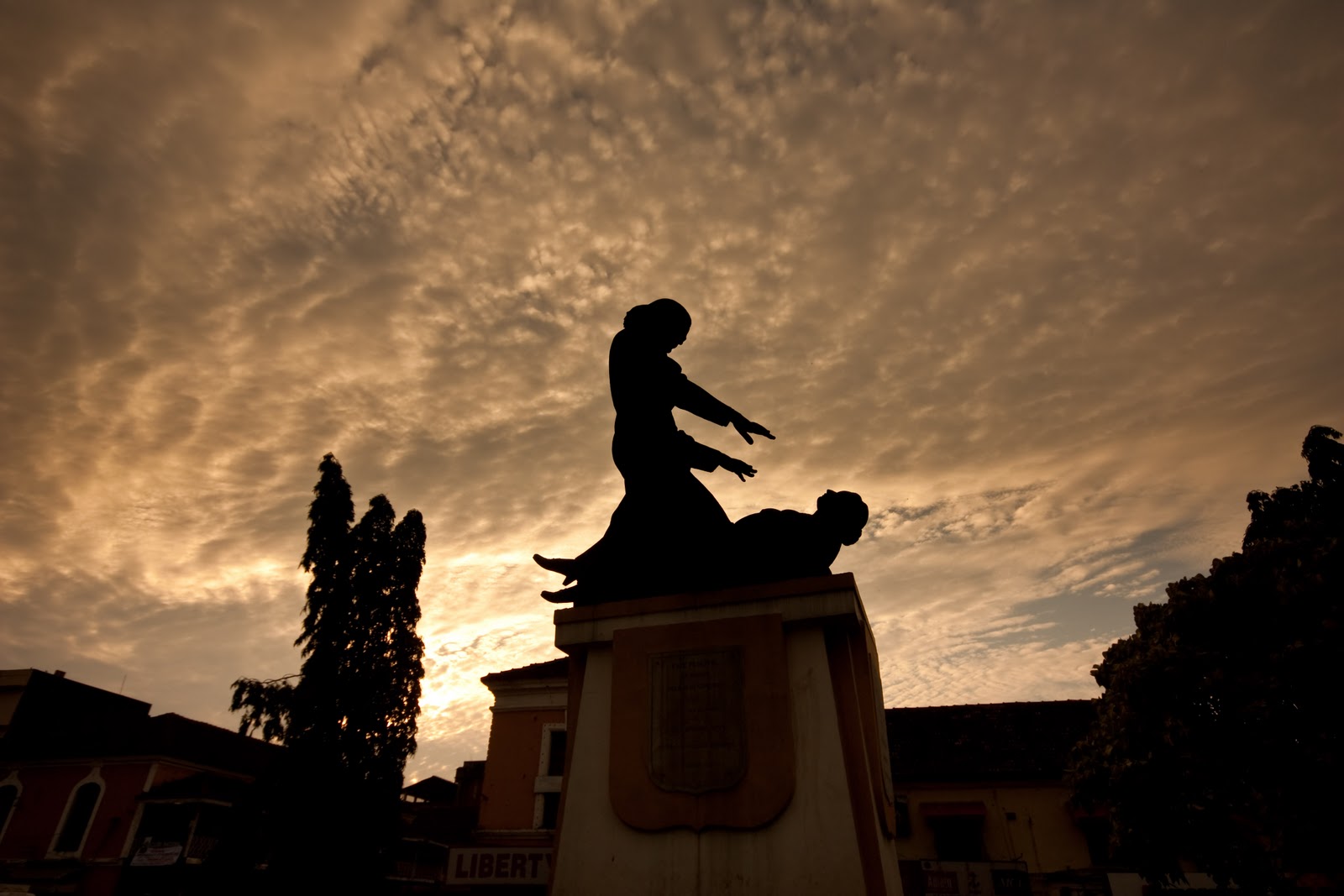
If you walk from the Panaji Secretariat along the Mandovi river, you will come across a rather strange and haunting statue in the middle of the square near the bus stop. While most locals ignore the statue, while sitting at the square or waiting for the bus, for some reason, I couldn’t take my eyes off this strange yet haunting statue. And as dusk began to fall, it gathered an even more haunting, even evil feel to it.

When I returned back to my Heritage Suite at my Mitaroy Heritage Homestay, I immediately got on the internet and did some research. The statue in question was of a priest standing tall over a woman who was lying down. The priests hands are outstretched towards the woman and the woman seems to be responding to whatever effect the man is having on her.

The priest in question is Abbe Faria (Abbe meaning priest in French). Abbe Faria is claimed to be the founder of the hypnotic sciences, even though imaginably, it wasn’t very popular in those days, hypnotism being usually connected with evil spirits and black magic. It is even conceivable that Abbe Faria might have even burned alive as a witch, if he had been a woman or had not been a priest.

Jose Custodia Faria was born to Rosa Maria de Sousa of Candolim and Caetano Vitorino Faira of Colvale. Born on May 31st, 1756 in the village of Candolim in Bardez Taluka or district, Faria spent most of his life outside Goa, dying finally in Paris on September 20, 1819.

His parent’s marriage was not a happy one and they often thought of separating. Caetano Faria, Abbe Faria’s father, had been studying to be a priest when he fell in love with Abbe Faria’s mother, Rosa Maria, who had been studying to be a nun. After they separated, Caetano Faria completed his priestly studies and Rosa Maria went off to the convent to become a nun, later becoming the Superior (Prioresa) of the Santa Monica Convent.

Abbe Faria was taken by his father to Lisboa (Lisbon) in 1771. They landed in Lisboa on November 23, 1771. The reigning Monarch at the time, Dom Jose I gave permission for Abbe Faria to go study in Rome to become a priest.

Abbe Faria was ordained a priest in Rome on March 12, 1789. After his ordination, he went to Portugal but soon returned back to Paris where he got himself involved in politics.

It was here that he began his sessions on magnetism and hypnotism, in one of the halls of Butel de Sarti’s school at 49, Rue de Clichy. The sessions were held every Thursday with an admission fee of five francs. Abbe Faria seemed to attract more women than men, who came either in the hope of finding a cure to their ailments or simply for the thrill.

Abbe Faria Statue in Panjim, Goa

While looking at Abbe Faria’s statue, I recalled his name being familiar to me for some odd reason. It was then that I realised that Abbe Faria had been immortalised by Alexandre Dumas in his world famous novel “The Count of Monte Cristo”, in which he was portrayed as The Mad Monk who was thrown into the dungeons and helped Edmund Dantes become the Count of Monte Cristo and avenge his enemies…

The history of Fontainhas, Goa’s Latin Quarter

Today Fontainhas is renowned as the Latin Quarter of Goa. But it had its own set of problems when it was being developed in the beginning. 

As more and more Portuguese families came to the settlement, the ward of Fontainhas grew rapidly and haphazardly, without any clear town planning in place. A set of houses, built wall to wall without proper sanitary and hygiene, raised grave health concerns. As a result, the then Governor of Goa, Jose Ferreira Pestana was forced to write to the President and Councillors of the Municipal Council to take action. In his letter he writes:

“The Governor informs the municipal authorities that there is urgent need to take all care and make all possible efforts to improve the Bairro das Fontaihas, where a large number of people live crowded in small houses, with little light, poor ventilation and little cleanliness and lot of humidity and heat. This may cause health problems to the inhabitants and, consequently, grave damage to the city. Therefore the municipality is asked to take action to see that the people of the ward as well as others in the city observe the ‘posturas’ that the Municipality has published. Also to remain watchful and have good management of its Taluka regimen”

Further the Governor General instructed the Municipality that the following measures needed to be undertaken:

  • Open windows on the walls for those houses that have none
  • Increase in size others that are small
  • Increase the height of the houses
  • Expose Enclosures made of ‘ollas’ (palm leaves
  • Clear the lanes and by-lanes of shacks, which they are trying to get converted into legal acquisitions using roof tiles and buildings walls of stones
  • Tenants should be asked to maintain the cleanliness  of the properties and drains of their area in order to allow free flow of water into the river

History of Fontainhas, Panjim, Goa

The Governor General also feared that the dirt and unhygienic conditions could cause sickness and epidemic which would spread much faster in a warm climate like that in Goa. 

The neighbourhood of Fontainhas was, as its name suggests, highly reliant on the “little fountain” of the area. The Governor General therefore starkly emphasized the need to improve the hygienic conditions around the fountain, which was the only source of potable drinking water in those days.

Being reminded of the origins of Fontainhas also serves to remind us of the importance of keeping our surroudings clean. My cleaning staff are instructed to not only clean the inside of The Mitaroy Heritage Homestay but also to sweep the front and back lanes that run beside our Heritage Homestay. If all of us do our bit, Fontainhas will be remain clean and hygienic for both its residents and its visitors. 

An tribute to the Fontainhas Art Festival

The Fontainhas Art Festival or “The Fontainhas Festival of the Arts” as it is officially known, was created with the aim of revitalising Panjim’s 200 years old Latin quarter and putting spotlight back on Goa’s neglected architectural legacy.

The week long festival of music, art, culture and hertiage put the spotlight on Panjim’s quaint and picturesque Latin quarter. A settlement on the fringes of the capital Panaji that was meant originally for Portuguese families, Fontainhas (which means “little fountain” in Portuguese and gets its name from the fountain at the foot of the hill) began to sprout around 1770. Patterned along the lines of Lisbon’s Bairo Alto, Fontainhas (also known as Bairro de Fontainhas) has a certain Moorish character to it and is hence referred to as the Latin quarter. Macau in China (originally another Portuguese settlement) also boasts of a similar Latin Quarter. 

With its single-storied bungalows criss-crossing narrow bye lanes, Fontainhas’ Iberian ambience makes it an attractive proposition for tourists, especially French and Portuguese tourists. A number of houses in the area have already been converted into ‘pousadas’ (small guest houses) ranging from the tacky to the upmarket. The Mitaroy, Goa – A Heritage Homestay is the latest addition with its 4 Heritage Suites of 1000 sq ft each. 

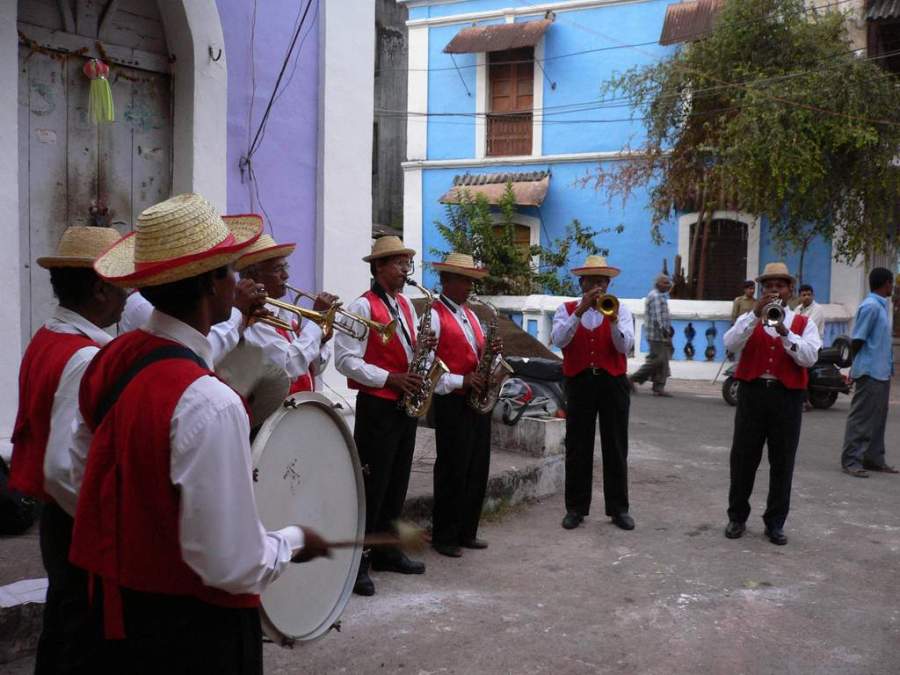
The Fontainhas Art Festival was organised by the Goa Heritage Action Group (GHAG). The Festival managed to attract a large number of tourists and locals to Fontainhas. As tourists get more discerning, they are looking for more than just sun and sand, they are looking to imbibe the local culture of the destination. And local festivals such as the Fontainhas Art Festival is able to attract such discerning tourists. The uniqueness of the Fontainhas Art Festival  was that artists exhibited their works in the houses within the Latin Quarter of Fontainhas. A selection of singers such as the famous Lorna of Goa and a number of local Goan bands also added to the whole experience, serenading the visitors as they went from house to house appreciating the art on offer. 

Fontainhas Art Festival, Fontainhas, Panjim, Goa

All in all, the Fontainhas Art Festival helped to throw a spotlight on one of Goa’s most charming, yet neglected architectural legacies. And that makes the demise of the Fontainhas Art Festival all the more sadder…

The tale of the Goan “shippie”

Ask anyone in Goa or South India for that matter what or who a Goan Shippie is and they will tell you –  someone who works full time on a ship, usually a Merchant Navy ship. 

But unlike in England where it was the lure of the sea and the big, bad world out there, Goan Shippie’s were forced to leave their homeland in search of jobs, due to lack of employment opportunities in Goa. With no single major industry in the territory and agriculture producing rice that was insufficient for even 4 months of the year, many Goans were forced to leave their homeland in search of a career at sea, especially if they wanted to feed their families. 

Thus Goans, mostly Christians, began to leave Goa for nearby Mumbai (then Bombay), Poona, Calcutta and other places in India, and for Africa, the Arabian Gulf, and former Persian Gulf areas, Burma and Malaya, then the British Empire.

With their easy going “susegaad” nature, natural intelligence and knowledge of English and Portuguese, Goan’s were a popular choice as seamen.

Both being Christians, the British employers were also partial to Goan seamen or shippies and hired the educated as clerks, and the uneducated as butlers, cooks, waiters in their homes, clubs and hotels. Goan shippies were also much in demand as chief stewards, barmen, cooks, and saloon and cabin crew of big and luxurious cabin liners.

But most importantly, Goan shippies were known for their hard work and positive attitude to work. Willing to work for many months at a stretch without a break, Goan shippies were known as being reliable, honest and hard-working.

These qualities are hard to come by in today’s Goan youth, one old-timer tells me. “Today, the youth in Goa is only interested in drinking, partying and having a good time. They don’t have the work ethics and respect for work that we had. Probably because of easy money coming from tourism and mining and sale of ancestral homes and land, they don’t have to work hard any more. In our time, it was different – work was worship” he wistfully recalls.